Bedroom Staging Tips in Dallas Fort Worth That Increase Home Value | Model My Home
Bedroom Staging Secrets That Increase Your Home's Value
The bedroom is one of the most personal spaces in a home, and when it comes to staging or decorating, it is also one of the most impactful. Whether you are preparing to sell or are wanting a space that feels more intentional and inviting, the way you arrange, style, and light a bedroom can completely transform how it feels to be in it. You do not need a big budget or a design degree to get it right. You just need to know where to start. This guide walks you through the key elements of a well-staged bedroom, from color and furniture placement to lighting and decor, so you can create a space that looks beautiful and feels cozy and relaxing.
1. Color Schemes That Set the Tone
Color is one of the fastest ways to influence how a bedroom feels the moment you walk in. The most effective palettes are soft, cohesive, and calming. Think warm whites, light neutrals, and muted blues or greens that create a sense of rest and retreat. These tones reflect light, make the room feel more expansive, and allow anyone to mentally picture themselves living there. Overly bold colors or heavy contrasts, on the other hand, can make a space feel smaller and less inviting.
2. Layered Bedding That Feels Intentional
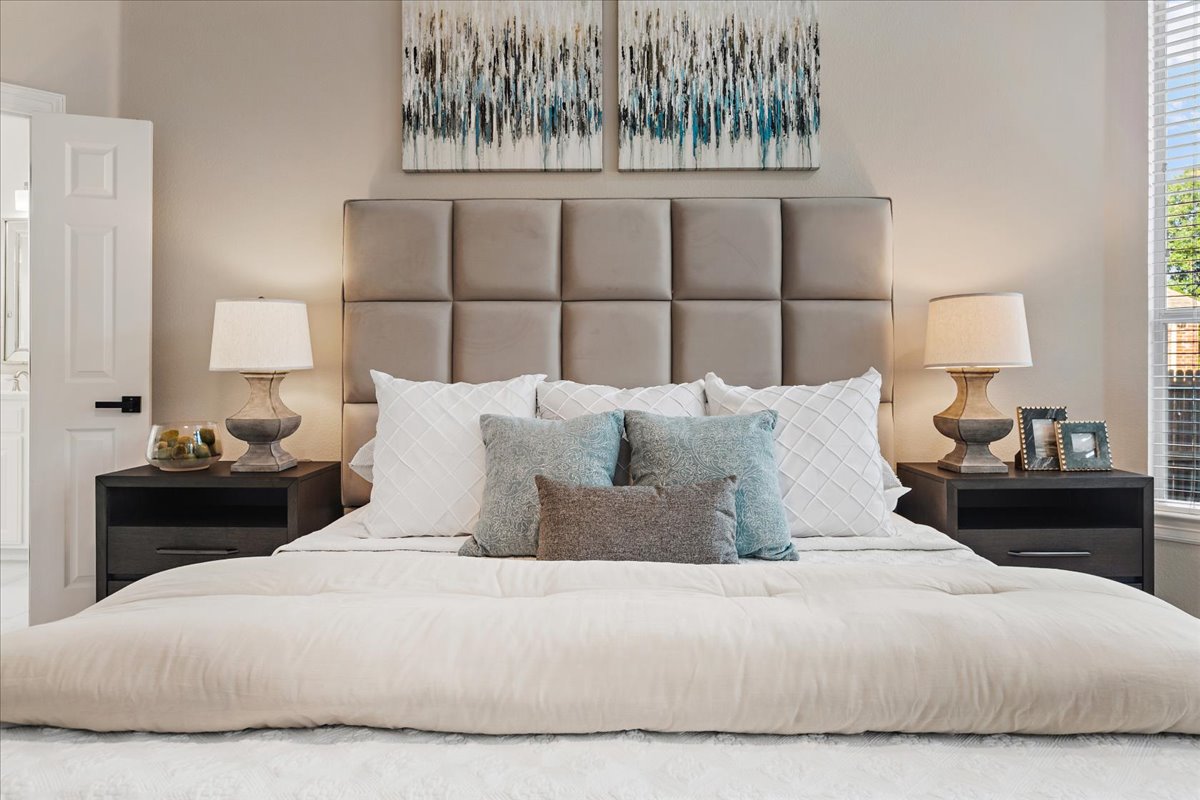
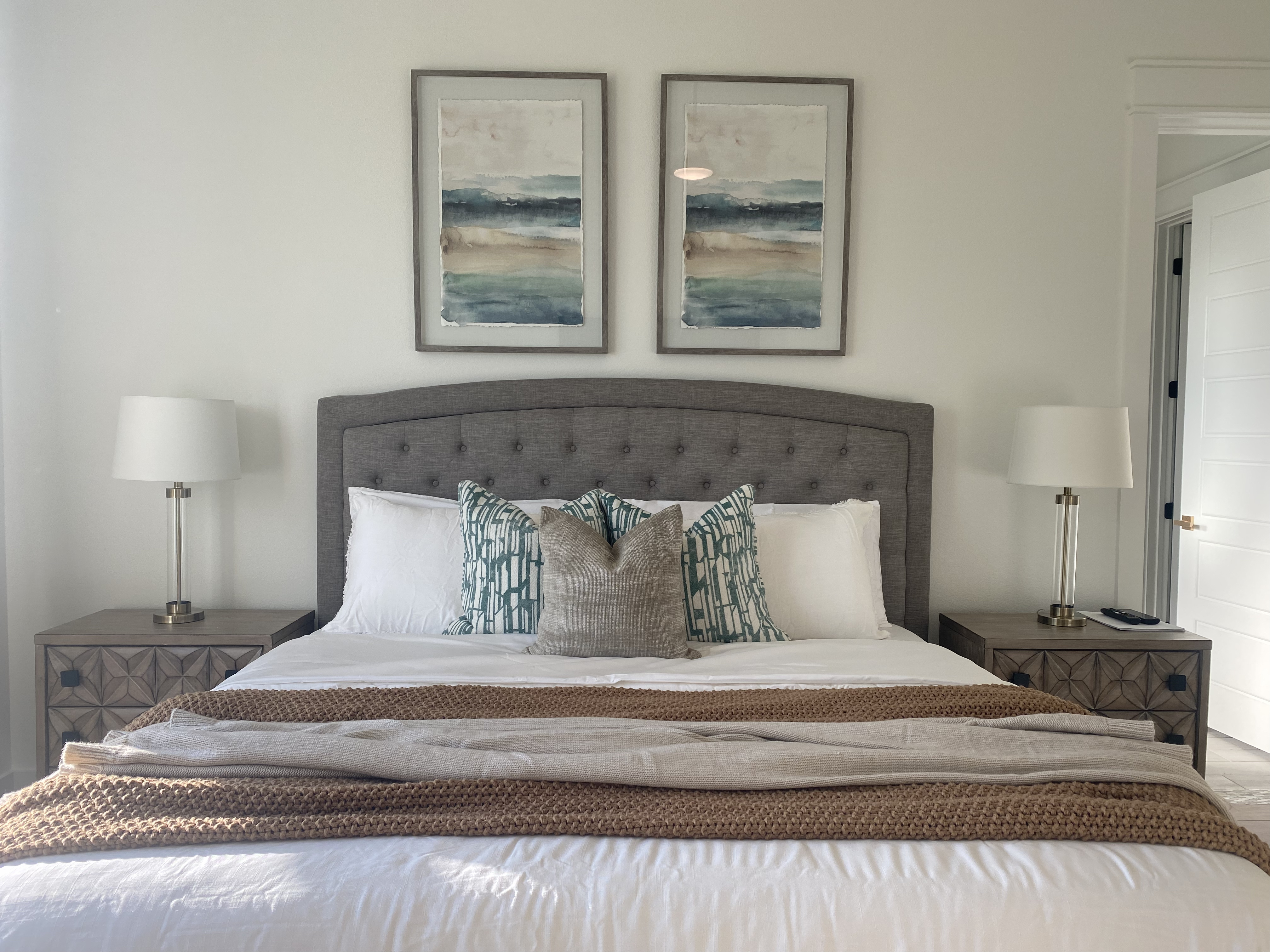
The bed is the focal point of any bedroom, and it should feel elevated yet effortless. The goal is to evoke a hotel-like experience: clean, inviting, and quietly luxurious.
Here is what that looks like in practice:
Start with crisp, neutral linens as your base layer
Add a duvet or quilt in a complementary tone for warmth and texture
Layer in two to three pillows of varying sizes to add depth without clutter
Finish with a folded throw at the foot of the bed for a polished touch
3. Proper Furniture Scale and Layout
A bedroom should feel open, not overcrowded. Choosing appropriately scaled furniture and leaving enough open space helps the room feel larger.
Keep these layout principles in mind:
The bed should be the visual anchor, ideally centered on the main wall
Nightstands should be proportional to the bed, not too tall or too wide
Leave at least two feet of walking space on each side of the bed when possible
Avoid pushing all furniture against the walls, as floating pieces slightly inward can actually make a room feel bigger
Remove any pieces that do not serve a clear purpose in the space
4. Lighting That Softens the Space
Lighting plays a critical role in how a bedroom is perceived. A combination of ambient and accent lighting, such as bedside lamps, creates warmth and dimension. Harsh overhead lighting alone can feel sterile, while softer, layered lighting makes the room feel relaxed and livable.
5. Minimal, Purposeful Decor
Decor should enhance the space, not distract from it. The key is restraint: every item should feel intentional and aligned with the overall aesthetic.
A few simple additions can go a long way:
Hang one piece of artwork above the bed or on a focal wall to draw the eye upward
Place a small plant or vase of stems on a nightstand or dresser for a natural, lived-in feel
Add a bench or upholstered stool at the foot of the bed for both style and functionality
Keep surfaces like dressers and nightstands mostly clear, with only one or two curated objects
6. The Power of Subtle Energy
Rooted in the principles of Feng Shui, the way a bedroom is arranged can go beyond aesthetics and influence how the space actually feels to spend time in. A well-balanced room starts with a grounded bed placement, minimal clutter, and a sense of symmetry that feels calm and intentional. Incorporating soft textures and natural elements can further enhance the feeling of comfort and stability. These subtle choices help any space feel restful, secure, and genuinely inviting.
Your Bedroom, Transformed
A well-staged bedroom is not just about how it looks. It is about how it feels. When every element works together, the space becomes more than just a room. It becomes an experience that is hard to walk away from.
Frequently Asked Questions
Do I need to repaint my bedroom before staging or decorating?
Not necessarily! If your walls are already a neutral or soft tone, a fresh coat of the same color can work wonders without the commitment of going entirely new. If the color is bold or very dark, repainting in a lighter, more neutral shade is one of the highest-return updates you can make. It does not have to be expensive to make a big difference.
How much should I spend on new bedding?
You do not need to break the bank. A crisp white or soft neutral duvet cover from a mid-range retailer can look incredibly polished with the right layering. Focus your budget on the pieces that show most prominently, like the duvet and pillowcases, and keep the rest simple.
What if my bedroom furniture does not match?
That is more common than you think, and it is totally workable. The key is creating visual cohesion through color and texture rather than perfectly matching pieces. A consistent color palette in your bedding, rug, and decor can tie mismatched furniture together beautifully.
How do I make a small bedroom feel larger?
Stick to a light color palette, keep furniture scaled appropriately, and resist the urge to fill every corner. Mirrors are a great tool as well, since they reflect light and create the illusion of more space. Less truly is more in a small room.
Is it worth staging a bedroom even if I am not selling my home?
One hundred percent yes. A well-decorated bedroom improves your everyday experience at home. The same staging techniques that appeal to buyers also create a space that feels calm, comfortable, and intentional to live in every single day.