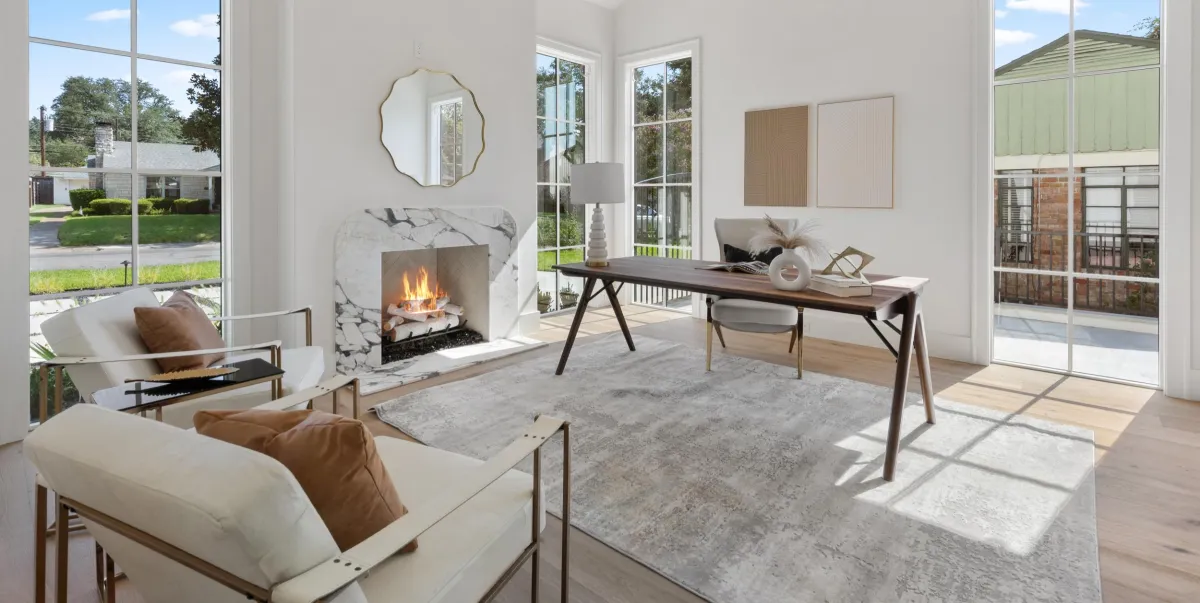
Designing an Office You Actually Want to Work In
5 Interior Design Tips for Creating an Inviting Office Space
A beautifully designed office feels more inviting and makes it easier to actually want to spend time there. When the space is also organized and functional, it can help minimize distractions and make it easier to stay focused and productive.
Whether you are designing a private office, a shared workspace, or a client-facing environment, the goal should be to create a space that feels functional, inviting, and representative of your style or brand.
It can be easy to let practicality take over when designing an office, but function and style do not have to compete. Some of the same principles we use in interior design and home staging, such as creating good traffic flow, choosing appropriately scaled furniture, and giving each area a clear purpose, can help transform an ordinary workspace into one that feels thoughtful and complete.
Here are five design principles to keep in mind when creating an office you actually want to spend time in.
Tip #1: Use Art to Give the Space Personality
Art is one of the easiest ways to introduce personality into an office and make the space feel less corporate or unfinished.
Start by thinking about where you want the eye to go when someone first enters the room. A large piece of artwork can create an immediate focal point and help anchor the furniture around it. Oversized pieces can work especially well on larger walls because they make an impact without requiring multiple smaller items to fill the space.
Gallery walls and curated collections are another option if you prefer a more layered look.
The artwork you choose can also communicate something about you or your company. In a client-facing office, it can become part of the overall impression someone has of your brand. In a personal office, it reflects your interests and makes the room feel more like your own.
Whatever direction you choose, make sure the scale, colors, and style of the artwork complement the rest of the room rather than feeling like an afterthought.
Tip #2: Pay Attention to Traffic Flow
Furniture placement can completely change the way an office feels.
Before committing to where your desk, chairs, storage, and other furniture will go, walk through the room and think about how you naturally use the space. Where do people enter? Which areas need to remain open? Can someone easily move from the door to the desk or seating area without navigating around furniture?
This is especially important in smaller offices where every piece needs to earn its place.
Trying to fit too much furniture into a room can quickly make it feel cramped. Sometimes removing one chair, table, or storage piece can make the entire space feel larger and more intentional.
This is one of the principles we also pay close attention to when staging a home. A good layout should make a room easy to navigate while clearly communicating how each area is meant to function.
An office may include a desk area, a client seating area, storage, and even a small lounge space. Each area serves a different purpose while still feeling connected to the overall design.
Tip #3: Create a Cohesive Color and Material Palette
One of the easiest ways to make an office feel professionally designed is to create consistency throughout the room.
Start with a general color and material palette and repeat those elements throughout the space. An easy way to choose a cohesive color palette is to pull colors from the artwork you choose.
If you prefer a modern look, you might combine light natural wood with black accents. That could include a light wood desk with black legs, floating wood shelves, black lighting, and a few pops of color.
If your style leans more traditional, you might incorporate richer woods, upholstered seating, brass accents, and softer neutral colors.
There is no single combination that works for every office, or personal style. What matters is that the different finishes feel connected.
Texture is important too. Rugs, upholstery, curtains, pillows, wood finishes, and even decorative objects add dimension to a space. Without those layers, an office can easily feel flat or overly sterile.
The goal is to create a room where the furniture, colors, finishes, and accessories feel like they were selected to work together.
Tip #4: Add One or Two Statement Pieces
Not every piece of furniture in an office needs to blend into the background.
A statement chair, interesting light fixture, bold piece of art, sculptural table, or distinctive accessory can give the room personality and keep the design from feeling too predictable.
If you love a bold accent chair, use it.
Just make sure it still works with the rest of the room.
Scale and proportion are especially important here. A statement piece should attract attention without overpowering the surrounding furniture or making the room feel crowded.
Function matters as well. An office chair may look great, but if you are sitting in it for eight hours a day, comfort cannot be an afterthought.
The best office design finds a balance between pieces that look interesting and pieces that actually work for the way you use the room.
Tip #5: Create a Comfortable Place Away From the Desk
Not every productive moment happens while sitting behind a desk.
Adding a secondary seating area can make an office feel considerably more inviting and versatile.
That might be a small sofa, a pair of comfortable chairs, or even one lounge chair with a side table and lamp. It gives you another place to read, think, have a conversation, meet with someone, or simply change your environment during the day.
Comfort matters here, but so does presentation.
A basic sofa can feel completely different once you add a few well-chosen pillows, a throw, a side table, and good lighting. These finishing touches soften the space and make it feel more intentional.
This is another area where interior design and home staging overlap. Small details often help communicate how a space is meant to be enjoyed. Instead of simply seeing a sofa against a wall, you begin to see a complete seating area with a purpose.
For larger investment pieces such as sofas, desks, and tables, choosing something relatively timeless can give you more flexibility. Pillows, artwork, accessories, and other smaller items are much easier to update as your style changes.
Your Office Should Work for You
A well-designed office is not just about making the room look good.
It is about creating an environment that supports the way you work while also making you, your team, and your guests feel comfortable in the space.
Sometimes the smallest changes make the biggest difference. Moving a chair can improve the flow of the room. Adding artwork can create a focal point. Bringing in a rug can define a seating area. A few layers of texture can make a basic office feel finished.
Good interior design considers function, comfort, scale, flow, and personality.
When those elements work together, an office becomes a place that feels intentional, reflects who you are, and makes spending time there a little more enjoyable.
Frequently Asked Questions About Office Design
How can I make my office feel more inviting?
Start with the elements that make the biggest visual impact, such as comfortable furniture, artwork, lighting, rugs, and a cohesive color palette. An organized layout and a few personal touches can also make the space feel warmer and more enjoyable to spend time in.
Can office design actually affect productivity?
Yes. A cluttered or poorly arranged office can create distractions and make it harder to focus. Creating dedicated areas for work, keeping frequently used items organized, and making sure there is enough space to comfortably move around can help create a workspace that supports productivity.
What type of lighting is best for a home or professional office?
Natural light is ideal when it is available, but a well-designed office should also include more than one source of light. Combining overhead lighting with a desk lamp or floor lamp creates a warmer environment and gives you better lighting for different tasks throughout the day.
Where should I position my desk in an office?
Whenever possible, position your desk where you can comfortably see the entrance without blocking the natural flow of the room. You should also consider windows, glare on computer screens, available outlets, and how the desk placement affects the rest of the furniture.
How can I update my office without replacing all of the furniture?
Small changes can make a noticeable difference. Try rearranging the furniture, changing the artwork, adding a rug, updating lighting, replacing pillows or accessories, or introducing a new accent color. You can often refresh the entire room without starting over.
What should I do if my office does not have much natural light?
Use layered lighting and lighter finishes to help brighten the room. A combination of overhead lighting, lamps, mirrors, lighter wall colors, and reflective surfaces can help a darker office feel more open and comfortable.
