What Is Home Staging? A Homeowner’s Guide Before Selling
You’re getting ready to sell your home. Your Realtor suggests staging, and you have questions: Does that mean replacing your furniture? Do you have to move out? Is it worth the cost?
Home staging is the process of preparing and presenting a property so prospective buyers can understand its spaces and picture themselves living there. It can involve rearranging what you already own or bringing furniture, artwork, and accessories into an empty home.
At Model My Home, we consider professional staging a must for presenting your home at its best in listing photographs and helping buyers connect with it during showings. That does not mean an unstaged home cannot sell. It means your home’s presentation deserves the same attention as its pricing and marketing.
We help Dallas-Fort Worth homeowners prepare both empty homes and homes they are still living in. These services are called vacant home staging and occupied home staging. Here’s what each involves and how they differ.
What does a professional home stager do?
A home stager looks at your property from a buyer’s perspective. Can someone understand the room’s purpose? Is furniture blocking a walkway or window? Does the arrangement draw attention to the fireplace, or away from it?
The stager recommends changes to layout, furniture, and styling that help the home show clearly. Depending on the service, you may receive advice to carry out yourself or have a team select, deliver, and arrange furnishings.
Staging works with other preparation tasks, but each has a different job:
Cleaning removes dirt and odors. Staging considers what people see and how a room works.
Organizing makes belongings easier to manage. Staging may also mean packing some belongings away so the property gets more attention.
Decorating reflects your preferences. Staging presents the home for prospective buyers.
Remodeling changes the property itself. Staging usually changes its presentation through furniture and accessories.
Photography records the presentation. Staging prepares the spaces before the camera arrives.
Confirm what your proposal includes. Cleaning, repairs, painting, and photography should not be assumed to be part of a staging service.
Why does home staging matter when selling a house?
Buyers have to connect room dimensions with everyday life. They may wonder whether a bedroom can accommodate a bed and nightstands, or where seating belongs in an open living area.
Staging can answer those questions visually. A well-chosen arrangement provides a sense of scale, shows a room’s function, and leaves clear paths through the home. It can also draw attention to useful features, such as natural light or a dining area that might otherwise look undefined.
In the National Association of REALTORS® 2025 Profile of Home Staging, 83% of buyers’ agents reported that staging helped buyers imagine the property as their future home. This reflects agents’ perceptions, rather than a controlled comparison proving that staging causes higher prices or faster sales.
For your listing, the practical goal is a clear, welcoming presentation in photographs and during showings. That can support a stronger first impression and help buyers connect with the space. Results still depend on condition, price, location, competition, and market demand.
Why stage a house that is already beautiful?
A beautiful home can still be arranged around one family’s habits. Your favorite chair may block a window. A dining room may work perfectly as a playroom but leave buyers unsure where they would host dinner.
Staging does not mean your taste is wrong. It means adjusting the presentation for people who have never lived there.
Sometimes the right changes are small: moving a chair, simplifying a bookshelf, or removing an extra table. The goal is to make the home’s features and possibilities easier to see.
What is vacant home staging?
An empty house gives buyers an unobstructed view, but it can leave questions about scale and furniture placement. Without familiar objects, a room’s size can be difficult to judge. An open area may also have no obvious purpose.
Vacant home staging means bringing furniture and decorative items into a property that is empty. A sofa and chairs can demonstrate a conversation area. A dining table can define space beside the kitchen. A bed can show one practical bedroom arrangement.
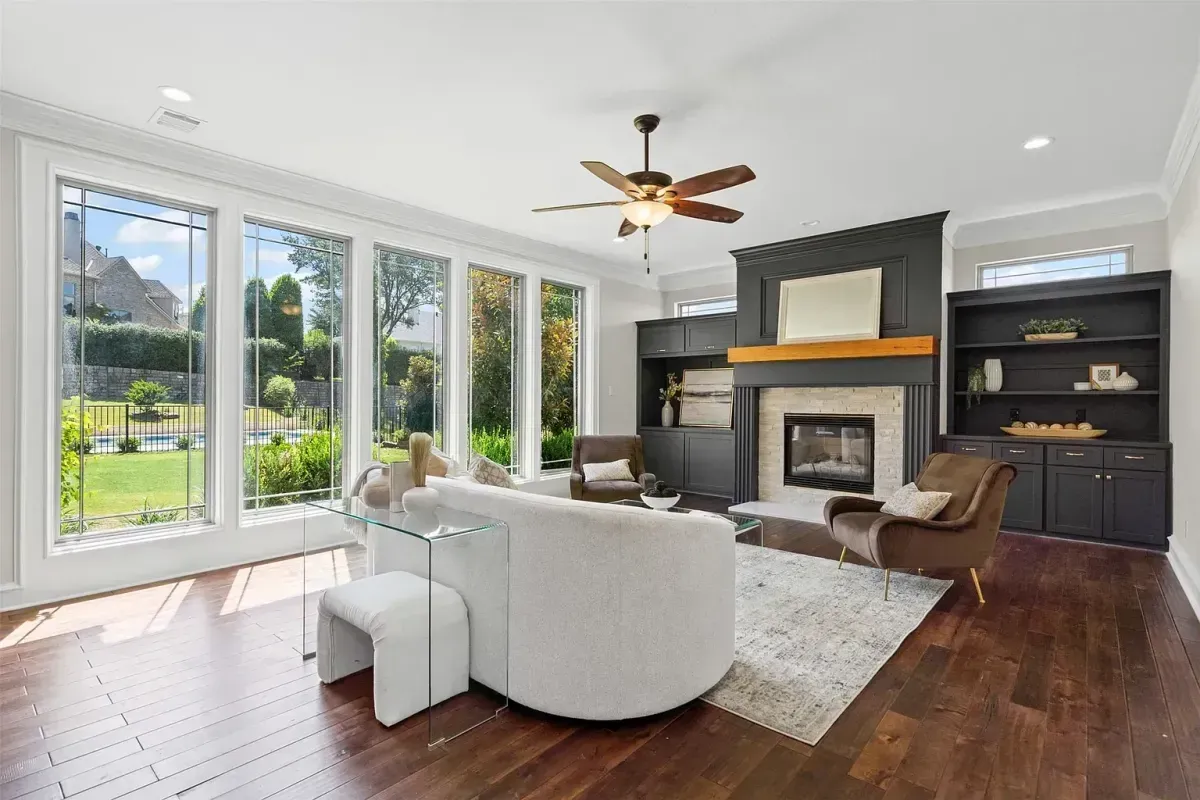
For example, imagine an empty living room with a fireplace on one wall and windows on another. Buyers may be unsure where seating would go. A suitable furniture arrangement can show how both features work together without blocking the route through the room. This is an illustrative example, not a prediction of sale results.
At Model My Home, our vacant home staging service brings professionally selected furniture, artwork, accessories, and textiles into your empty home. Our design team plans the arrangement, and our installation team delivers and sets up the furnishings.
We select pieces to suit the home’s layout, architecture, size, and price point. The result gives buyers a furnished setting to experience in person as well as in listing photos. Staging can focus on core rooms, with additional spaces included in a customized proposal.
What is occupied home staging?
Occupied home staging means preparing your home for sale while you are still living in it. The starting point is the furniture, artwork, and belongings you already own.
At Model My Home, we offer occupied home staging consultations where a designer comes to your home and walks through the entire property with you. Together, you look at each room through a buyer’s eyes. Our designer helps you work through changes using your own belongings so you understand what to adjust and why.
That can include finding a better arrangement for your living room furniture, choosing which artwork to display, simplifying shelves and countertops, and identifying items to pack away before photography. The focus is on helping you use what you have to highlight the home’s features and make each room feel welcoming and easy to understand.
The consultation gives you guidance specific to your entire home, rather than a generic checklist. Any additional furnishings or services can be discussed separately as part of the agreed scope.
Tell your stager about children, pets, work routines, and furniture you need each day. A workable plan should account for how you will live in the home during the selling process.
For showings, keep a simple routine: make beds, clear surfaces, put everyday items in their designated storage, and check the entrance. Ask about permitted use and care of any rented items before incorporating them into daily life.
What is the difference between vacant and occupied staging?
The main difference is what we start with and how the work is carried out.
Vacant staging furnishes an empty property. We select, deliver, and arrange staging inventory to show room function, furniture scale, and layout. Our team returns to remove the staging items as arranged under the agreement.
Occupied staging works with a home you are living in. Our designer walks through the entire home with you and helps you improve its presentation using your furniture and belongings. The consultation focuses on practical changes you can carry through into listing photos and showings.
Both services serve the same purpose: helping buyers see the home’s strengths and picture themselves living there. Living in the property does not prevent you from preparing it professionally for the market.
Is professional home staging worth the money?
We recommend treating staging as an essential part of preparing your home for the market. Professional guidance helps you make deliberate choices about what buyers will see in listing photographs and experience when they walk through the door.
The investment should match the property and your Realtor’s marketing plan. For an empty home, that may mean furnishing the main living spaces. For a home you still occupy, a designer’s consultation helps you make the most of your existing belongings.
Look at the proposed work alongside other preparation costs. Necessary repairs and cleaning still matter. Furniture cannot fix a maintenance problem or compensate for an asking price that does not fit the market.
Discuss these questions with your Realtor and stager:
Which rooms are hardest to understand or photograph?
How does the home compare with competing listings at its asking price?
What type of buyer is likely to consider the property, and which spaces will matter to them?
Would a consultation or a few staged rooms address the main concerns?
What is the total cost, including any potential extension of the staging term?
Consider the home’s condition and size as well as its price point. A larger property does not necessarily need every room staged, and a smaller property may benefit from careful furniture sizing.
The value you are evaluating is better presentation and support with preparing the home. No staging proposal should be treated as a guaranteed financial return, selling price, or time to sale.
How does the professional home staging process work?
The details depend on the service. For a vacant installation, Model My Home’s published process includes a personalized quote, an agreement, design preparation, installation, and furniture removal. Here is how those stages fit into your selling plan:
Discuss the property and your goals. Share the home’s location, size, listing plans, and whether it is empty or lived in.
Identify the rooms needing attention. Decide where furniture or styling would most help explain the home.
Review a customized proposal. Confirm the rooms, services, price, term, and responsibilities before proceeding.
Arrange the installation. Coordinate the staging date and access. Our vacant process includes a contract and invoice, followed by design planning and inventory selection.
Have the furnishings installed. The team delivers and arranges the agreed furniture, artwork, textiles, and accessories.
Photograph and show the prepared home. Coordinate professional listing photography after staging is complete.
Arrange furniture removal. Our team returns to collect staging items. Confirm the timing under your agreement and coordinate it with your sale and closing plans.
For an occupied home, the process centers on your designer’s visit and a walkthrough of the entire home. You work through how to improve each room with your own belongings, then coordinate the recommended preparation before photography and showings. Confirm which changes you will carry out and whether any additional services are included.
Before signing, also ask what happens if the property needs staging longer than expected or your listing timeline changes.
Which rooms should you stage?
Start with rooms that explain how the home lives. The right priorities depend on the layout, budget, and likely buyers.
Living room: Seating helps demonstrate scale, conversation areas, and paths through the space.
Primary bedroom: A bed and supporting pieces show a practical layout without overcrowding.
Dining room or dining area: A table makes the room’s purpose clear, particularly in an open floor plan.
Kitchen: Clear counters and restrained accessories let buyers focus on workspace and finishes.
Entryway: A simple arrangement supports a welcoming arrival and clear access.
Bathrooms: Clean surfaces and a few appropriate accessories help keep attention on the room itself.
Kitchens and bathrooms often need accessories rather than large furniture pieces. An office or extra living area may deserve attention if its function is unclear or it is an important feature of the home.
Ask for a room-by-room recommendation rather than assuming the largest package is the best fit.
What are the drawbacks of virtual staging?
Virtual staging adds furniture and accessories digitally to photographs. The furniture appears in the image, but it is not in the property when a buyer visits.
That distinction matters. A digitally furnished photo may suggest how a room could look, but buyers still walk into an empty space. They must imagine the furniture arrangement and room function again, and the in-person experience can feel different from what drew them to the listing.
Virtual staging also does not rearrange your actual furniture, clear a walkway, or improve the physical presentation of a lived-in home. If digital furniture is shown at an unrealistic scale, the image can give an inaccurate impression of what fits. Edited photos should be clearly identified and accurately represent the property.
At Model My Home, we recommend preparing the actual home so the presentation carries from the listing photographs into the showing. Vacant staging gives buyers real furnishings and arrangements to experience. Occupied staging helps you improve the rooms they will actually walk through, using your own belongings.
Frequently asked questions about home staging
Do I have to stage my home to sell it?
A home can sell without staging. But when your goal is to present it at its best for listing photos and help buyers connect with the property, we consider professional staging a must. It gives the presentation a clear purpose, whether we are furnishing an empty home or helping you prepare an occupied one with your own belongings. Staging supports the marketing plan; it does not guarantee a sale or a particular price.
Is staging worth it in a slower housing market?
When buyers have more homes to compare, giving your property a clear, welcoming presentation is especially important. We recommend planning staging alongside pricing and photography so buyers can understand what your home offers. Discuss the scope and any extension costs as part of your marketing budget. Results still depend on the property and market.
How much does it cost to stage a house?
The price depends on the service, number of rooms, home size, furnishing needs, and staging duration. Model My Home provides customized quotes. Ask whether the price includes design, delivery, installation, removal, and any ongoing charges so you can compare proposals fairly.
Can I stage only a few rooms, and do I need to move out?
You can discuss staging selected rooms. You do not have to move out to receive occupied staging advice. The appropriate service depends on what is already in the home and what needs to change.
Will professional staging hide problems with my home?
It should not. Staging should clarify the home’s features and use, not conceal damage or misrepresent its condition. Discuss repair needs separately and address problems openly with your Realtor.
Should staging happen before listing photography?
Yes, plan to complete the agreed staging and preparation before the photographer arrives. This lets the photographs reflect the presentation buyers will encounter during showings.
Who pays for staging, the homeowner or Realtor?
Who pays for staging depends on your arrangement with your Realtor. Talk with your Realtor about how staging fits into your listing plan and whether any staging costs are included in the services they provide.
What payment options does Model My Home offer?
At Model My Home, we offer a pay-at-close program as well as flexible financing options for homeowners who prefer not to pay the full staging cost upfront. Talk with our team about the available payment options and how they apply to your staging project.
Why work with Model My Home?
Model My Home is a family-owned home staging company serving Dallas-Fort Worth and surrounding communities since 2002. We have completed more than 9,000 staging projects and supported more than $2.5 billion in real estate through our staging work.
That experience includes working with homeowners, Realtors, builders, and investors across different property sizes, layouts, and price points. We bring that perspective to preparing your home for the people who will see it next.
For vacant properties, our in-house design team, furniture inventory, warehousing, and logistics support the project from planning and furniture selection through installation and removal. Your staging proposal can be customized to the home and the rooms that need attention.
For occupied homes, our designers bring professional guidance directly to you. Walking through the entire home together helps turn the question “What should I change before listing?” into practical decisions about your furniture, artwork, accessories, and everyday belongings.
Whether your home is empty or lived in, our focus is on helping you prepare the actual property for photographs and buyer visits.
If you are preparing to sell in Dallas-Fort Worth, request a personalized home staging quote. Tell us whether your home is vacant or occupied, and we can discuss the staging service or designer consultation that fits your property and listing plans.
